 Skip to navigation
Skip to main content

Morocco destination guide
Best Places to Visit in Morocco
The best places to visit in Morocco are not all the same kind of beautiful. Some pull you into busy medinas; others slow the journey down with desert silence, mountain roads or Atlantic air.
This local guide helps you compare Morocco destinations by experience, travel time and route—not by an arbitrary ranking. Start with what you want to feel, then build a journey that fits your dates.

History & culture
Marrakech, Fes and Rabat
01
Desert landscapes
Merzouga and the southern route
02
Mountains & valleys
High Atlas and Dades
03
Atlantic coast
Essaouira, Agadir and Taghazout
04

Where to go in Morocco
Choose a route, not a checklist.
Morocco rewards travelers who connect a few places well instead of collecting cities at speed.
Marrakech and Fes reveal two different sides of urban Morocco. The Sahara adds distance, dramatic scenery and a slower rhythm. The Atlas Mountains, Dades Valley and Aït Ben Haddou turn the road itself into part of the experience. Essaouira or Taghazout can then soften the final days with ocean air.
The right combination depends on where you arrive, how many nights you have and how comfortable you are with long drives. A seven-day Morocco trip should not be planned like a two-week journey. First-time visitors often enjoy a mix of one major city, one landscape-led route and one slower stop.
Use this guide to identify the places that belong together. The destination guides linked below can later answer the deeper questions about what to see, how long to stay and what each place adds to your Morocco itinerary.
For seven days: Put Marrakech, Fes and one priority between them. Pick Chefchaouen for the north or Merzouga for the dunes if your group prefers shorter days. The one-week itinerary shows where a full loop uses up the most travel time.
For ten days: If you can arrive in Casablanca and depart from Marrakech, use the one-way ten-day route for the medinas, desert and High Atlas. With a Marrakech round trip, compare the Marrakech-start itinerary and decide whether to spend the last night in Marrakech or adjust your departure.
For a city break: Pick one base and one landscape you can reach without moving hotels. Marrakech pairs well with a day in the Atlas or a coast stay if you have an extra night. For the medina itself, the Marrakech day plans show what can fit around the souks, historic sites and gardens.
Choose your starting point
Begin with a route, a custom idea or one free day.
You do not need to use the same planning path for every kind of Morocco experience. Start with the option closest to what you already know.
City · 2–4 nights
1. Marrakech
Marrakech is a strong starting point for a first Morocco trip: energetic medina lanes, historic palaces, gardens, food and quick access to the High Atlas. Give the city enough time to move beyond Jemaa el-Fna and balance the intensity with a calm riad or a nearby day trip.
Best for: first-time visitors, food, design and short extensions.

Imperial city · 2–3 nights
2. Fes
Fes suits travelers who want living history and traditional craftsmanship. Its medina asks for patience: the reward is a dense world of workshops, courtyards, markets and religious architecture. Pair Fes with Chefchaouen, Meknes or a route south toward Merzouga.
Best for: history, crafts and cultural depth.

Desert gateway · 2–3 nights
3. Merzouga & Erg Chebbi
Merzouga is the gateway to the Erg Chebbi dunes. The experience is bigger than a camel ride: the changing light, open horizon and night sky give the journey its character. Build it into a multi-day route and allow for the distance from Marrakech or Fes.
Best for: Sahara scenery, desert camps and photography.
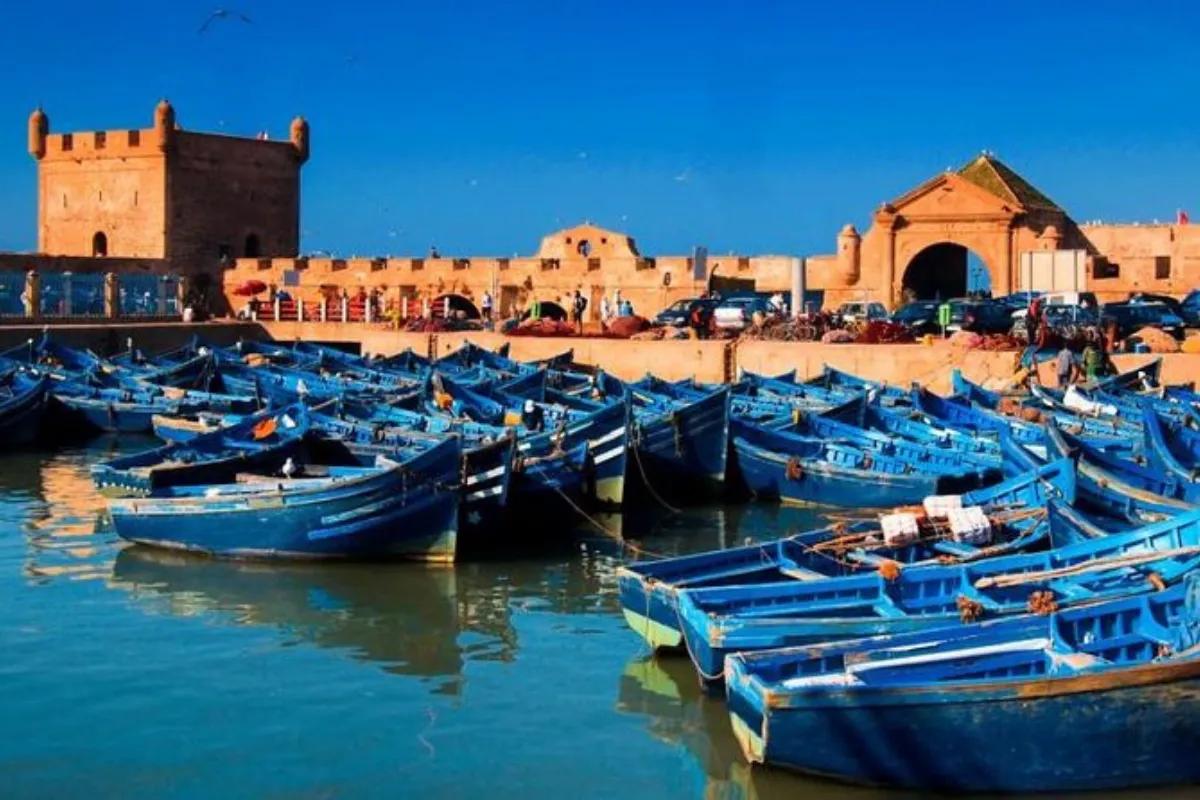
Atlantic coast · 2–3 nights
4. Essaouira
Essaouira offers one of Morocco’s easiest changes of pace. Its walkable medina, working port, galleries and windswept beach feel calmer than Marrakech. A day trip works, but two nights let you experience the town after the excursion traffic leaves.
Best for: seafood, creative atmosphere and a relaxed finish.

Mountains · 1–3 nights
5. High Atlas Mountains
The High Atlas replaces medina noise with village paths, valleys and big horizons. Ourika is accessible as a day trip, while Imlil and other valleys deserve longer. Choose the route according to season, walking ability and whether you want a gentle landscape stop or a serious trek.
Best for: hiking, village stays and cooler air.

Heritage stop · 1 night
6. Aït Ben Haddou
This earthen ksar is most rewarding when treated as part of the route across the Atlas rather than a quick photo stop. Walk through the village, notice how the architecture responds to the landscape, and combine it with Ouarzazate or the valleys farther east.
Best for: architecture, history and road-trip scenery.

Scenic route · 1–2 nights
7. Dades & Todra Gorges
Dades and Todra break up the road between the imperial cities and the Sahara with palm valleys, dramatic rock formations and village life. Staying overnight makes the long desert route more balanced and gives you time for a walk rather than seeing the landscape through a window.
Best for: road trips, walks and southern landscapes.

Rif Mountains · 2 nights
8. Chefchaouen
Chefchaouen’s blue streets are the first attraction, but its gentler rhythm is the reason to stay. Early mornings and evenings feel very different from the busy midday hours. It combines naturally with Tangier or Fes and works best when northern Morocco is already part of the route.
Best for: photography, slow mornings and northern routes.

Capital · 1–2 nights
9. Rabat
Rabat is composed, green and often overlooked. The kasbah, Atlantic views and historic sites sit within a modern capital that is easier to navigate than Morocco’s busiest visitor cities. It is a useful cultural stop between Casablanca and the north.
Best for: heritage without heavy crowds and a calmer city stay.
Atlantic city · 1 night
10. Casablanca
Casablanca is less about a traditional sightseeing circuit and more about contemporary urban Morocco. The Hassan II Mosque is the landmark; architecture, cafés and the oceanfront complete a short stay. Include it when flights or the wider route make sense, not simply because it is the largest city.
Best for: architecture, arrivals and modern city life.
Beach & surf · 2–4 nights
11. Agadir & Taghazout
Agadir works for travelers who want an easy beach base and modern services. Nearby Taghazout adds surf culture and a smaller coastal atmosphere. Choose this area for ocean time and relaxation; choose Essaouira when medina character matters more.
Best for: beaches, surfing, families and winter sun.

Southern gateway · 1–2 nights
12. Ouarzazate
Ouarzazate is a practical bridge between Marrakech, Aït Ben Haddou, the valleys and the desert. Film studios may attract attention, but the real value is geographic: the city anchors a route through some of southern Morocco’s most cinematic landscapes.
Best for: desert routes, kasbahs and scenic drives.

A quicker decision
Which Morocco destinations fit your trip?
Start with the experience you care about most, then add places that sit naturally on the same route.
Marrakech + Fes for two contrasting medinas and imperial-city character.
Culture
High Atlas + Dades + Merzouga for a journey shaped by the road.
Landscape
Essaouira + Chefchaouen for smaller cities and unhurried mornings.
Slow travel
Marrakech + Sahara + Fes for a strong mix when you have enough time.
First trip
Essaouira for culture; Agadir and Taghazout for beach and surf.
Coast
Morocco at a glance
Compare the best places to visit in Morocco before choosing your route.
A beautiful destination can still be the wrong fit for a short trip. Compare atmosphere, minimum stay and natural route partners before you decide.
| Marrakech | Food, design, palaces and medina energy | 2–4 nights | High Atlas, Essaouira, Aït Ben Haddou |
| Fes | Craft traditions and deep medina history | 2–3 nights | Chefchaouen, Meknes, Merzouga |
| Merzouga | Erg Chebbi dunes and Sahara nights | 1–2 nights locally | Dades, Todra, Fes or Marrakech |
| Essaouira | Atlantic air, seafood and a walkable medina | 2–3 nights | Marrakech |
| High Atlas | Mountain walks, valleys and village life | 1–3 nights | Marrakech, southern Morocco |
| Chefchaouen | Blue medina and a slower northern rhythm | 1–2 nights | Tangier, Tetouan, Fes |
| Rabat | Casablanca, Tangier, Fes | 1–2 nights | Casablanca, Tangier, Fes |
| Agadir & Taghazout | Beach time, surf and winter sun | 2–4 nights | Essaouira, Taroudant |
Suggested stays are planning ranges, not rules. Your arrival city, season and preferred pace should always shape the final Morocco itinerary.
Start with the traveler
Best places in Morocco for your travel style
The strongest trip is not the one with the most stops. It is the one where each stop gives you something different.
These combinations answer a more useful question than “What is the number one place?” They help match the best places to visit in Morocco with the experience you actually want.
First visit
Marrakech, Fes and the southern route
Choose two contrasting imperial cities and connect them through Aït Ben Haddou, Dades and Merzouga when you have at least eight to ten days. With less time, keep one city and explore its surrounding region properly.
Couples
Essaouira, the Atlas and the Sahara
Mix intimate riads, scenic drives and slower evenings. Essaouira adds coastal calm; a mountain lodge or desert camp adds landscape without making every day about sightseeing.
Families
Marrakech, the coast and gentle mountain stops
Limit long transfers, plan downtime and choose activities by age. Marrakech offers variety, Essaouira is easy to explore on foot, and selected Atlas valleys create a nature day without committing to a demanding trek.
First visit
Marrakech, Fes and the southern route
Choose two contrasting imperial cities and connect them through Aït Ben Haddou, Dades and Merzouga when you have at least eight to ten days. With less time, keep one city and explore its surrounding region properly.
Outdoor travel
High Atlas, Todra and the Atlantic
Build around the activity rather than adding it between drives. Hiking conditions depend on elevation and season; Atlantic destinations work for surfing, while Todra and Dades suit walking and dramatic road scenery.
Slow travel
Fewer bases, longer stays
Spend three or four nights in one city, add a village, valley or coastal town, and leave open time. Morocco becomes more rewarding when markets, cafés and neighborhoods are allowed to become familiar.
Choose your starting point
Begin with a route, a custom idea or one free day.
You do not need to use the same planning path for every kind of Morocco experience. Start with the option closest to what you already know.

5–7 days
One region, better explored
Combine Marrakech with the High Atlas and Essaouira, or explore Fes with Chefchaouen and nearby heritage stops. If the Sahara is essential, expect more driving and keep the rest of the route focused.

8–10 days
City, mountains and desert
A practical classic links Marrakech, Aït Ben Haddou, Dades, Merzouga and Fes. This gives the southern road a purpose while keeping enough time for two major cities.

One day
A broader Morocco journey
Add Rabat, Chefchaouen or Essaouira to the imperial-city and Sahara route. Two weeks lets you include northern Morocco or the Atlantic without turning every morning into a departure.
Season changes the map
Where to go in Morocco by season
Morocco does not have one climate. Conditions can be different on the Atlantic coast, inside an imperial city, in the High Atlas and beside the Sahara dunes on the same trip.
Spring and fall are popular because they can balance city exploration, southern routes and outdoor time. Summer favors the Atlantic coast, higher elevations and carefully paced city visits. Winter can bring pleasant daytime light in the south, cooler nights in the desert and cold or snow at elevation.
Always check conditions for your exact dates. Seasonal weather, daylight, Ramadan timing, local holidays and mountain-road conditions can affect opening hours, activity plans and realistic travel times.
March–May
Spring
Strong for Marrakech, Fes, the Atlas foothills, valleys and broad north-to-south routes. Demand rises around holiday periods, so well-located stays may need earlier planning.
June–August
Summer
Mix intimate riads, scenic drives and slower evenings. Essaouira adds coastal calm; a mountain lodge or desert camp adds landscape without making every day about sightseeing.
September–November
Fall
A flexible season for the best places to visit in Morocco, including imperial cities, desert routes and the coast. Temperatures still vary, so pack for both warm afternoons and cooler evenings.
December–February
Winter
Good for city culture, Atlantic breaks and southern scenery when you prepare for cold nights. High Atlas itineraries need weather-aware planning and appropriate clothing.

Local planning perspective
What first-time visitors often underestimate
Distance is part of the experience
Marrakech and Merzouga look manageable on a map, but the road crosses the High Atlas and several southern regions. A good desert route uses Aït Ben Haddou, Dades, Todra and oasis landscapes to make the transfer meaningful.
01
Medinas require a different pace
Historic centers are best explored on foot. Pick-up points, luggage access and travel time can differ from modern neighborhoods. A central riad is atmospheric, but its access may not work like a conventional hotel entrance.
02
One free afternoon adds real value
A flexible half-day lets you return to a souk, rest after a long drive, book a hammam or follow a local recommendation. Not every useful moment belongs in a fixed itinerary.
03
The right guide changes what you notice
In Fes, Marrakech and heritage sites, local context turns architecture and craft into a story. Use guided time where interpretation matters, then protect independent time for personal discovery.
04

Before you lock the route
Three details change which places belong together.
Your arrival and departure cities
An open-jaw flight can reduce backtracking. Casablanca, Marrakech, Fes, Tangier and Agadir each create different route possibilities.
01
Your tolerance for driving
The Sahara is far from Morocco’s major visitor cities. The valleys and heritage stops along the way turn that distance into a journey, but the driving remains real.
02
The season and elevation
Weather can vary greatly between coast, mountain, city and desert. Choose activities and travel pace for the actual month, not for a single idea of Moroccan weather.
03
Practical answers
Questions about the best places to visit in Morocco
What are the best places to visit in Morocco for a first trip?
A balanced first trip usually combines Marrakech or Fes, the Sahara Desert, one mountain or valley stop, and the Atlantic coast if time allows. The best choice depends on your arrival city and available nights.
How many days do I need to see Morocco?
Seven to ten days can cover several major destinations at a comfortable pace. Twelve to fourteen days gives more room for northern Morocco, the Sahara and the coast. With five days, focus on one region.
Is Marrakech or Fes better for first-time visitors?
Marrakech works well for travelers who want energy, food, design and easy day trips. Fes suits travelers drawn to history, traditional crafts and a more intricate medina. Many longer routes include both.
Is the Sahara Desert worth visiting?
The Sahara is a defining Morocco experience for many travelers, but it requires realistic driving time. It works best as part of a multi-day route with Aït Ben Haddou and the valleys rather than as a rushed excursion.
What is the best coastal place to visit in Morocco?
Essaouira is a strong choice for medina atmosphere, seafood and a relaxed pace. Agadir and Taghazout are better suited to beach time, surfing and resort-style stays.
Can I customize a route between these Morocco destinations?
Yes. Tiziri Travel can review your dates, arrival and departure cities, interests and preferred pace, then shape a route around the places that fit rather than forcing every destination into one trip.
Which places in Morocco are best for families?
Marrakech, Essaouira and selected Atlas valleys work well when activities, transport and downtime are adapted to the children’s ages. Families planning the Sahara should break up long drives and avoid an overloaded itinerary.
Where should I go in Morocco without a car?
Marrakech, Fes, Rabat, Casablanca, Tangier and Essaouira can be explored largely on foot once you arrive. Trains connect several major northern and imperial cities, while private transport is more practical for mountain, valley and desert routes.
What places should I combine with Marrakech?
For a short trip, combine Marrakech with the High Atlas or Essaouira. With more time, travel across Aït Ben Haddou and the southern valleys toward Merzouga, then continue to Fes instead of backtracking.
Are Morocco's best destinations suitable for solo travelers?
Many are. City medinas, coastal towns and organized multi-day routes can work well for solo travelers. Plan arrival details, transport and accommodation access carefully, especially for late arrivals and remote regions.
How far in advance should I plan a Morocco trip?
Planning several months ahead gives more choice for popular riads, camps and guides during spring, fall and holiday periods. A last-minute trip is still possible, but the route may need to stay flexible.
Turn places into a journey
Tell us which parts of Morocco stay in your mind.
Share your dates, arrival city and travel pace. We will help connect the places into a route that makes sense on the map and feels right on the ground.