


Need a custom Tours? Contact us!
Marrakech Activities

Welcome to the vibrant heart of Morocco, where ancient traditions meet exhilarating adventures. Whether you’re planning a romantic escape, a family holiday, or a solo exploration, the city offers an endless array of unforgettable experiences. From camel rides in the Palmeraie to hot air ballooning over the Atlas Mountains, Marrakech activities cater to every interest and travel style.
As you wander through bustling souks, embark on thrilling quad biking tours, or savor a hands-on cooking class with a local chef, you’ll uncover the magic that makes Marrakech one of the world’s most captivating destinations. This guide highlights the top Marrakech Activities—each one carefully curated to help you experience the culture, landscape, and spirit of this remarkable city.
Top Things to Do in Marrakech
1. Explore the Medina of Marrakech (UNESCO World Heritage Site)
- The old city (Medina) is a maze of narrow alleys filled with souks, traditional riads, artisans, and centuries-old architecture. Wander through its bustling streets to discover:
- Hidden courtyards and riads
- Traditional Moroccan lanterns, carpets, and spices
- Historical buildings like Ben Youssef Madrasa


2. Camel Ride in the Palmeraie or Agafay Desert
- Experience the charm of a camel ride at sunset under the palm trees or in the rocky landscapes of Agafay. Ideal for families or romantic getaways, this includes:
- Traditional Berber attire
Scenic views and photo opportunities
Mint tea in a desert camp
3. Day Trip to the Atlas Mountains or Ourika Valley
- Escape the city for a day and explore the High Atlas Mountains or the scenic Ourika Valley with its waterfalls and Berber villages. Activities include:
- Local cuisine and pottery workshops
- Easy hikes
- Visits to traditional Berber homes

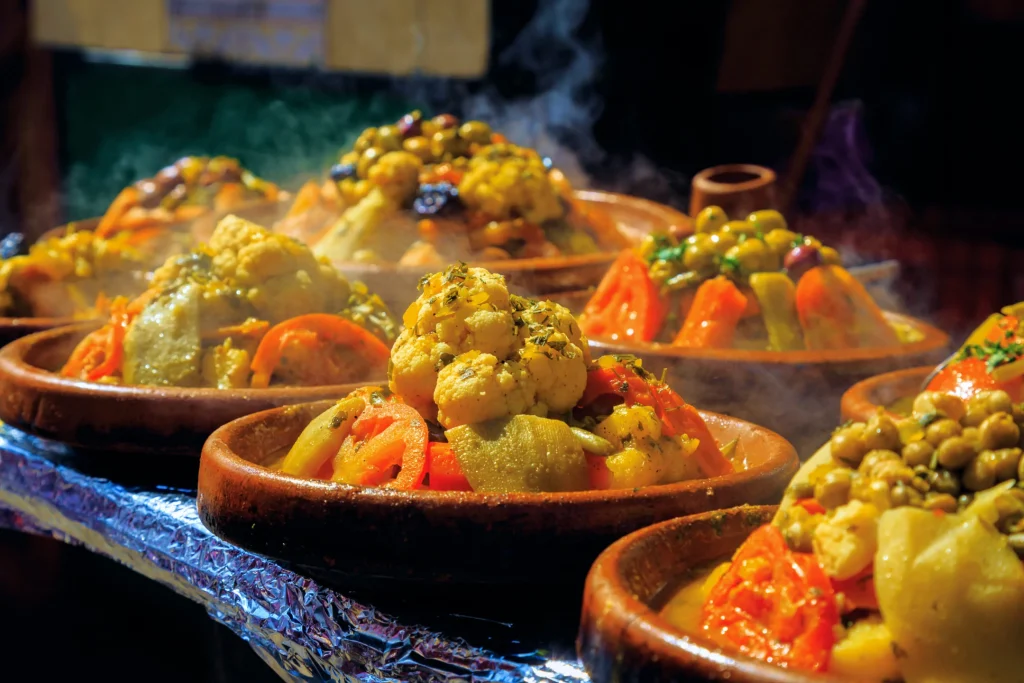
4. Join a Moroccan Cooking Class
- Learn how to make traditional dishes like tagine or couscous with a local chef. A cooking class usually includes:
- Tasting your homemade lunch or dinner
- A visit to a local market
- Hands-on preparation of Moroccan meals
5. Quad Biking & Adventure Sports
- For thrill-seekers, go quad biking in the Agafay Desert or Palmeraie. Many tours combine this with camel rides or lunch in a desert tent. You can also try:
- Zip-lining in the Atlas foothills
- Buggy driving
- Horse riding


6. Hot Air Balloon Ride over Marrakech
- Float above the city and desert landscapes during sunrise. It’s a magical way to witness the sunrise over the Atlas Mountains, followed by:
- Certificates and photos
- A Berber breakfast in a local tent
7. Visit the Souks & Jemaa el-Fnaa Square
- The heart of Marrakech’s energy is the famous Jemaa el-Fnaa, known for:
- Nearby souks with traditional leather, spices, silver, and more
- Street performers, snake charmers, storytellers
- Food stalls selling snail soup, fresh orange juice, and kebabs


8. Jardin Majorelle & Yves Saint Laurent Museum
- A peaceful escape from the bustle, Jardin Majorelle is an iconic botanical garden created by French artist Jacques Majorelle. Don’t miss:
9. Visit Historical Landmarks
- Dive into Marrakech’s rich Islamic architecture and royal heritage by exploring:
- Koutoubia Mosque – Marrakech’s tallest mosque and a city symbol
- Bahia Palace – a 19th-century masterpiece with intricate tilework
- El Badi Palace – now in ruins but historically significant


10. Indulge in a Traditional Hammam
- Unwind like a local in a Moroccan hammam (bathhouse) with:
- Steam bath and black soap exfoliation
- Relaxing massages and natural oils
- Luxury options available in riads and spas
- Henna Café for traditional henna and tea
Best Outdoor Activities in Marrakech

A camel ride near Marrakech is a unique and accessible experience — blending nature, culture, and charm. Whether you opt for the shady palm groves of Palmeraie or the stark beauty of Agafay, you’re bound to come away with a memorable, photo-worthy day
Marrakech Camel Ride
Quad biking around Marrakech combines scenic desert landscapes and cultural insights—from the shaded palms of Palmeraie to the dramatic vistas of Agafay. Whether you’re in search of speed, tranquility, or a lively evening under the desert stars, there’s a ride that’s just right.
Palmeraie Quad Bike
Exploring the High Atlas Mountains on a day hike from Marrakech offers an unforgettable blend of stunning mountain scenery, authentic Berber village life, and refreshing valleys. Here’s a full guide to help you choose the perfect trek and a peaceful retreat into one of Morocco.
Atlas Mountains Day TripMarrakech rewards lovers of the open air with a surprisingly diverse menu of adventures that extend from manicured city gardens to untamed mountain escarpments. Begin your exploration beneath the whispering fronds of the Palmeraie, the oasis of more than 100,000 date palms that has shaded travelers since the caravan days. Here, sunrise paints the trunks bronze, and the temperature remains forgiving enough for a leisurely camel ride, an introductory quad‑bike circuit, or a horse‑drawn calèche tour past mud‑brick ksour and hidden riads. For a more horticultural slant, lose yourself in Majorelle GardenYves Saint Laurent’s cobalt‑blue masterpiece—followed by a stroll through the adjacent.
Marrakech Activities Swap palms for peaks on a guided day hike in the High Atlas. Just ninety minutes south of the medina lies the Imlil valley, gateway to 4,167‑meter Jebel Toubkal. Even novice trekkers can handle the three‑hour circuit to Aroumd village, pausing in walnut groves for picnic tajines. Spring carpets the slopes with wild iris and poppies, while autumn brings saffron harvests in nearby Taliouine. If you crave altitude but not exertion, opt for a 4×4 ascent of the Tizi n’Tichka Pass, a serpentine ribbon of asphalt soaring to 2,260 meters; photo stops reveal panoramic switchbacks, parched plateaus, and isolated Amazigh hamlets where schoolgirls wave as you roll past.
Water lovers needn’t feel left out. The Lalla Takerkoust reservoir, thirty‑five minutes west of town, offers kayaking, stand‑up paddleboarding, and jet‑ski rentals against a cinematic Alpine backdrop. Operators such as Tiziri Travel arrange transfers, equipment, and a post‑paddle couscous in a Berber tent. For a wilder splash, day‑trip north to the Ouzoud Waterfalls—Morocco’s tallest at 110 meters—where rainbows arc through perpetual spray and Barbary macaques scamper across olive branches overhead. The moderately steep loop trail descends stone steps to the plunge pool, where you can board a rustic raft to feel the roar reverberate through your chest.
Cyclists will find ample two‑wheeled delight: rent a mountain bike and tackle the Marrakech Palm Grove greenway, a 17‑kilometre circuit threading irrigation canals and remote villages, or join a guided road‑bike climb from Tahanaout to Asni, rewarded with fresh‑pressed orange juice on a café terrace facing snow‑capped summits. Adrenaline seekers gravitate toward the Terres d’Amanar adventure park, home to Africa’s longest zip‑line at 320 metres, suspended high above juniper forests; rock‑climbing instructors anchor routes from 4b to 7a on golden limestone, while archery lessons teach proper stance and Amazigh legends in equal measure.Marrakech Activities
Marrakech Activities Finally, remember that Marrakech itself is an outdoor museum. Rise early to wander the medina’s labyrinthine alleys before the stalls open, when shafts of sun pierce the wooden lattices overhead and cats stretch on mosaic doorsteps. By late afternoon, the plaza of Jemaa el‑Fnaa becomes a living theatre: acrobats somersault, Gnaoua troupes beat iron castanets, and vendors juggle freshly squeezed orange juice. Accept an invitation to a rooftop café, order a frothy khoudenjal (ginger tea), and watch the muezzins’ chorus echo across the clay‑red rooftops as Atlas peaks blush pink on the horizon. These moments, half spectacle, half serenity, constitute Marrakech’s most authentic outdoor activity—no gear required.
Marrakech Camel Rides & Desert Tours
The evocative silhouette of a camel caravan against a flaming Sahara sunset epitomises Moroccan dreamscapes, and Marrakech Activities serves as the ideal launch pad for both short camel rides and multi‑day desert odysseys. First‑time visitors often start with a gentle one‑hour dromedary trek through the Palmeraie, where guides wrap you in indigo cheches and teach basic Arabic commands—“yalla” to go, “hss!” to stop—while relating the importance of the camel as “ship of the desert.” Even within sight of the city’s minarets, the rhythmic sway and faint jingle of brass bells conjure tales of medieval caravans laden with salt and gold.
For a taste of genuine desert topography without committing to the long haul, head forty minutes south‑west to the Agafay Desert, a moonlike expanse of golden stone and sparse acacia that locals call the “Desert of Marrakech.” Tiziri Travel offers half‑day camel circuits weaving past Bedouin camps, culminating in a sunset tea ceremony as lights flicker on at eco‑luxury lodges such as Scarabeo Camp. Here, you can segue into stargazing with an astronomer, the Milky Way arching overhead unmarred by city glare.
Those yearning for the iconic rippling dunes must venture farther east to the Erg Chebbi or Erg Chigaga seas of sand. A classic three‑day tour departs Marrakech at dawn, traversing the High Atlas via Tizi n’Tichka and pausing at Aït Ben Haddou, a UNESCO‑listed ksar whose mud towers starred in Game of Thrones and Gladiator. Continue through the Valley of Roses—intoxicating in May when petals dry on rooftops—before reaching the Sahara’s threshold at Merzouga.
Longer itineraries extend to five or seven days, adding the volcanic splendor of Jebel Saghro, fossil hunting in Alnif’s Devonian beds, and nomad encounters along the Draa Valley where date palms quilt the riverbanks. You might hike to rock art sites depicting ancient giraffes, evidence of a greener Sahara millennia ago. Adventurous souls can request a detour to M’Hamid El Ghizlane, last outpost before the Draa disappears into dunes, where you swap camels for fat‑bike sand‑cycling or kite‑surfing across dry lake beds.
Whichever route you choose—Palmeraie taster or week‑long expedition—remember key tips: pack a light scarf for sandstorms, moisturise with argan oil, and keep your phone wrapped in a zip‑lock bag. Shoulder seasons (March–April and October–November) offer daytime warmth without summer’s furnace heat, while December skies glow crystal clear but nights demand thermals. Always verify that your operator employs ethical camel care: padded saddles, limited daily ride hours, ample water breaks, and veterinary oversight.
Camel rides and desert tours from Marrakech are more than photo ops; they are an immersion into Morocco’s Saharan heritage. As dawn blushes over a dune crest and your camel rises beneath you, remember that you are retracing pathways carved by Sijilmasa merchants a thousand years ago. The romance is real precisely because the history still whispers in every grain of sand.


Cultural Experiences & Cooking Classes
Marrakech’s rich cultural tapestry is best appreciated not from behind bus windows but through participatory experiences that engage all five senses. Begin with an immersive souk tour led by a certified guide fluent in Arabic, French, and English. Navigate quarter‑specific lanes—the dyers’ Souk Sebbaghine where skeins of wool drip primary colours, the metalworkers’ Souk Haddadine alive with hammer beats, and the parfumeurs’ Souk El Attarine perfumed with amber and musk grains. Along the way, your guide deciphers haggling etiquette—start at one‑third of the asking price, smile, and seal the deal with “b’ssaha!” (to your health).
Continue the cultural deep dive with a visit to a traditional hammam. Marble steam rooms, eucalyptus‑laced water, and vigorous kessa glove scrubs have purified Marrakchis for centuries. Opt for a private riad spa for luxe serenity or join locals at Hammam Mouassine, built in 1562 by Saadian Sultan Abdallah Al‑Ghalib. The attendant will ladle water from brass buckets, guiding you through sauna, scrub, and ghassoul clay mask, leaving skin soft and spirit renewed.

Sign up for a cooking class in a family‑run riad or organic farm outside the city walls.
Learn how to make traditional dishes like tagine or couscous with a local chef. A cooking class usually includes:
- A visit to a local market
- Hands-on preparation of Moroccan meals
- Tasting your homemade lunch or dinner
No Moroccan journey is complete without mastering its cuisine. Classes typically start with a market tour where you learn to select the freshest coriander, preserved lemons, and sweet paprika. Back at the kitchen, don a striped apron and grind chermoula marinade in a mortar while your host narrates how spices arrived via trans‑Saharan caravans. You’ll simmer chicken tajine with saffron threads, roast zaalouk eggplant salad, and whip up fluffy msemen pancakes. Lunch is eaten communally, scooping with khobz bread and toasting with freshly brewed mint tea.
For craftsmanship aficionados, Marrakech offers myriad artisan workshops. In the tanneries, you can dye a goatskin wallet indigo using natural indigofera pigments. At a ceramic studio in the Kasbah, shape clay on a foot‑powered wheel, learning the signature “Fez blue” glaze technique. Weaving cooperatives in the Sidi Ghanem district let you throw shuttles on vertical looms, creating a small kilim co‑designed with your colour palette—an original souvenir imbued with personal narrative.
Performance arts thrive after sunset. Attend a Gnaoua trance ceremony in a hidden zaouia where iron qraqeb castanets and three‑stringed guembri bass echo beneath candle‑lit arches. Elsewhere, the Théâtre Royal stages Andalusian orchestras, while the intimate Dar Cherifa literary café hosts poetry nights bridging Arabic classical verse and contemporary Amazigh slam.
Finally, volunteerism can deepen cultural exchange. Spend a morning at the Project Soar girls’ empowerment centre teaching English games, or join a medina clean‑up with local NGO Pikala Bikes, which also trains youth as bicycle mechanics and tour guides. These initiatives transform your visit from spectator to stakeholder, leaving positive footprints in the community.
Cultural experiences in Marrakech revolve around connection: to artisans, to flavours, to centuries‑old rituals. When you depart, you’ll carry more than souvenirs; you’ll carry stories, recipes, and the warmth of Moroccan hospitality that begins with the greeting “Marhaban bik”—you are welcome here.
Quad Biking & Adventure Sports
If Marrakech’s medina represents the city’s soul, its outskirts showcase a playground for speed, adrenaline, and unfiltered nature. Quad biking tops the list, with half‑day tours kicking up dust across the Palmeraie’s palm‑shaded tracks or the rocky Agafay plateau. After a quick safety briefing—throttle control, body positioning on turns, and signals—riders suit up with helmets and goggles before threading between prickly pear cacti. Speeds can reach 50 km/h on straight stretches, but guides set a pace comfortable for novices while still thrilling for veterans. Stops at Berber villages provide mint tea and panoramic photo ops.
Upgrade the adventure by switching to buggy driving, two‑seaters with roll‑cages and hydraulic shocks perfect for power‑sliding across washboard valleys. Couples appreciate the shared cockpit and easier steering, especially on sunset departures when the Atlas range glows amethyst. For multi‑hour routes, operators combine engines with culture: race to a desert camp for a camel ride, drumming workshop, and candle‑lit dinner beneath nomad tents before revving back under constellations.


Beyond motorised thrills, Marrakech offers mountain biking in the Kik Plateau where shepherd trails contour barley terraces and fragrant thyme fields. Single‑track routes descend 1,000 vertical metres from Moulay Brahim to Asni, rewarding technical riders with switchbacks and river crossings. E‑mountain bikes level the playing field, letting varying fitness levels pedal together atop Bosch‑powered assistance.
Rock climbers flock to the Gorges d’Aguerd n’Ouzrou near Imlil, featuring bolted limestone routes graded 5a–7c. Spring and autumn deliver friction‑friendly temperatures, and local guides supply gear and topos. For a unique vertical twist, try via ferrata at Ouirgane, a protected climbing path of iron rungs and cable traverses that culminates in a 40‑metre zip‑line across a turquoise reservoir.
Water‑based adrenaline awaits at Lalla Takerkoust, where wake‑boarding behind a speedboat or trying the new electric‑powered surfboards (e‑foils) yields an instant Instagram reel. Windsurfers harness afternoon thermals, while summer Saturday evenings host floating DJ stages—a desert Ibiza vibe with Berber flair.
Skyward ambitions find satisfaction in paragliding from Aguergour cliff, soaring 600 metres above red‑clay foothills. Tandem pilots handle take‑off and landing, leaving guests free to gasp at argan forests and distant adobe villages. Sunrise flights are smoothest; midday thermals add roller‑coaster lifts for daredevils. Back on terra firma, adrenaline junkies can attempt enduro motorbiking on single‑day rallies through wadis and sand pits, or sign up for a 4×4 self‑drive expedition learning dune tactics, navigation by GPS, and recovery with sand ladders.
Safety underpins every adventure sport. Choose operators certified by the Moroccan Royal Federation of Motorsports or the Mountain Guide Association, check equipment age and insurance coverage, and heed the Moroccan saying “sh‑wi‑ya, sh‑wi‑ya” (slowly, slowly) until skill meets terrain. With the right balance of horsepower and prudence, Marrakech transforms into an adrenaline canvas where every rev, pedal stroke, and take‑off carves indelible memories.
Day Trips & Excursions from Marrakech
Marrakech’s strategic location makes it a launch pad for day trips that shift landscapes and cultures within hours. The most popular excursion is to the Ourika Valley, a cool refuge 60 kilometres south. Red‑earth villages cling to terraced hillsides, and riverside cafés chill soda bottles in glacial meltwater. A guided trek climbs to the Setti Fatma waterfalls—seven cascades reached via stepping‑stone crossings and fig‑tree ladders. In spring, cherry and almond blossoms scent the air; in summer, locals wade knee‑deep to escape city heat.
Westward lies Essaouira, a UNESCO‑listed Atlantic port two‑and‑a‑half hours away. En route you’ll pass argan cooperatives where goats famously perch in trees. Once inside Essaouira’s white‑and‑blue ramparts, wander bastions still echoing with Hendrix lore, browse thuya‑wood workshops, and feast on grilled sardines straight from fishermen’s barrows. The steady trade wind, alizé, lures kitesurfers to beach breaks, while art galleries display naïf paintings capturing the town’s mystical aura.
North‑east toward Beni Mellal, the Ouzoud Waterfalls thunder year‑round. Hire a local skipper to paddle you near the 110‑metre drop, spray cooling your camera lens. Lunch on berber tagines overlooking rainbows, then hike to the top for panoramic photos and friendly macaques (watch your snacks). The drive showcases Middle Atlas farmland: silvery olive groves, pomegranate orchards, and wheat fields rippling like silk under the wind.
Movie buffs gravitate east to Aït Ben Haddou and Ouarzazate, dubbed “the Hollywood of Africa.” After crossing the sinuous Tizi n’Tichka Pass, explore the ancient mud‑brick ksar where Gladiator fought, Daenerys plotted, and Lawrence of Arabia rode. Nearby, Atlas Film Studios offers prop‑filled backlots: Egyptian obelisks, Tibetan monasteries, and biblical markets all sun‑baked and eerily silent. Studios café serves surprisingly good espresso—a relief before the return drive.
Adventure lovers can summit Mount Toubkal in two days, but a teaser day hike from Imlil provides altitude thrills without the commitment. Guides lead you through juniper forests to Sidi Chamharouch shrine, a white boulder said to cure infertility. Lunch in a Berber house—flatbreads baked in earthen ovens, honey from the family’s hives—then descend as cloud shadows race across terraced barley.
Closer to town, the Agafay Desert delivers lunar landscapes without lengthy drives. Combine dune‑surfing on sandboards, camel rides, and sunset dinners under canvas, returning to Marrakech before midnight. Birdwatchers might choose the Oukaïmeden Plateau instead, spotting crimson‑winged wheatears and alpine choughs while exploring Neolithic petroglyphs.
Day excursions from Marrakech reveal Morocco as a mosaic of oceans, mountains, waterfalls, and ancient citadels—all within reach of breakfast in the medina and dinner back at a rooftop riad. Pack layers, curiosity, and a wide‑angle lens; the Kingdom’s diversity will fill every frame.
Hot Air Balloon Rides over Marrakech
Few experiences rival watching dawn ignite the Marrakech plain from the basket of a hot‑air balloon. Your adventure begins pre‑dawn when a 4×4 collects you, navigating quiet streets scented with fresh khobz until city lights fade into darkness. At the rural launch site, burners roar, inflating rainbow envelopes that glow ember‑red against a star‑studded sky. Pilot and crew conduct safety briefings—brace position on landing, no leaning out—and distribute fleece blankets for the crisp morning air.
Take‑off is startlingly gentle: the ground drifts away like an elevator with invisible cables. Within minutes, Marrakech’s labyrinth shrinks to a terracotta mosaic punctuated by minarets; the Atlas Mountains loom to the south, their snowcaps catching first light. Below, emerald patches reveal olives and wheat; wandering camels etch lazy trails. The pilot adjusts altitude using blasts of flame, skirting clouds at 1,000 metres before descending low enough to greet shepherds who wave up from rooftop terraces.
The standard flight lasts 45–60 minutes, covering 15–25 kilometres depending on wind. Some operators coordinate balloon fleets of up to ten craft, providing cinematic opportunities to photograph multicoloured orbs suspended over ochre plains. Nature occasionally adds drama—a flock of storks gliding past or a desert fox sprinting for cover as shadows sweep over.
Upon landing, thrill turns to celebration: crew members serve a traditional Berber breakfast of msemen pancakes drizzled with argan honey, hard‑boiled eggs dusted in cumin, olives, and steaming mint tea. Pilots present commemorative flight certificates, often inscribing passengers’ names in elegant Arabic calligraphy. Premium packages upgrade to a Champagne toast or a camel ride back to the vehicles.

Safety is paramount. Choose companies licensed by the Moroccan Civil Aviation Authority, whose pilots hold EASA or FAA‑equivalent balloons licences. Weather briefings occur the night before; flights may be postponed for winds above 12 knots or impending rainfall. Prime season stretches from mid‑September through May when cool air yields stable lift and cloudless vistas; summer flights still operate but launch earlier to avoid thermal turbulence.
Eco‑conscious travellers appreciate that modern balloons run on propane, emitting comparatively low carbon per passenger. Some operators offset emissions by planting olive trees in rural communities and employ local villagers as chase‑crew, spreading tourism benefits.
As you glide in silence above this timeless landscape, consider the dual perspectives: ancient traders once trudged these very plains for weeks, whereas you traverse them in silent grace within an hour. That juxtaposition—old and new, earthbound and airborne—captures Marrakech’s essence, making a hot‑air balloon ride not just an activity but a meditation suspended between sky and sand.
Nightlife and Local Markets
When sun dips behind the Koutoubia’s silhouette, Marrakech undergoes a transformation: spices smoulder, drums beat, and neon flickers to life behind mashrabiya screens. Jemaa el‑Fnaa is the epicentre, morphing from daytime bazaar into an open‑air banquet lit by a thousand lamps. Steam billows from snail soup cauldrons, lamb brochettes sizzle on charcoal, and orange‑juice vendors beckon with cries of “boussa mdina!” (kiss of the city). Street performers gather crowds—fire breathers, storytellers recounting epic poems, and transfixing Gnaoua percussionists whose hypnotic rhythms draw spectators into whirling dances.
Venture north into the tangle of night souks, open late during Ramadan and peak tourist season. Lantern shops glow like stained‑glass cathedrals; leather tanneries exude a musky tang as craftsmen stitch babouches under bare‑bulb light. Haggle for saffron, argan oil, or meteorite fragments (likely basalt, but the story sells). Keep eyes peeled for brocante stalls unloading antique daggers, phonographs, and Jewish Berber amulets—relics of Morocco’s multicultural past.
Layout of the Marrakech Souks
The souks radiate out north of Jemaa el-Fna and follow a labyrinthine layout, with small alleys, covered walkways, and vibrant open areas. It’s divided into several main areas:
| Souk Semmarine | The main artery — textiles, kaftans, slippers, bags |
| Souk El Attarine | Spices, perfumes, essential oils |
| Souk Haddadine | Metalwork and iron lamps |
| Souk Smata | Traditional Moroccan babouches (slippers) |
| Souk Cherratine | Leather bags, belts, poufs |
| Souk Sebbaghine | Dyers’ souk – vibrant wool and thread |
| Souk des Bijoutiers | Jewelry – silver, Berber and Tuareg styles |
For a modern twist, Marrakech’s rooftop bars blend mixology with skyline views. Head to Le Salama for passionfruit mojitos amid art‑deco palm prints, or to Kabana where resident DJs spin Afro‑house while the Koutoubia looms majestic. Trendsetters flock to Gueliz district, sipping craft beers at Barometre, Morocco’s first speakeasy, its entrance masked by a refrigerator door. Nearby, Churchill’s favourite haunt—the Churchill Bar at La Mamounia—serves aged negronis beneath Moorish arches, live jazz flowing like honey.
Dance‑floor devotees will find their beat at Theatro, a converted 1950s cinema where acrobats descend from the ceiling and LED screens pulsate to international EDM acts. For something more intimate, African Chic hosts live Afro‑jazz ensembles, its red‑velvet sofas perfect for date night whispering. LGBTQ+ travellers enjoy a discreet yet vibrant scene at So Lounge’s themed nights, though public displays of affection remain culturally sensitive.
Away from the frenzy, explore the Kasbah night markets, where locals shop for coriander bunches and sardines at half the medina prices. Sample bessara (fava‑bean soup) ladled from dented pots, sprinkle with cumin, and eat shoulder‑to‑shoulder with taxi drivers discussing football. Finish with sfenj—Moroccan doughnuts—dunked in steaming atay b’naanaa (mint tea), the sugar restoring your sparkle for after‑hours explorations.
Cap the evening in a traditional riad concert, where Andalusian orchestras pluck oud and piano‑like qanun under cedar ceilings. The ambience feels suspended in 12th‑century Al‑Andalus, olive‑oil lamps casting lace shadows on zellige tiles. Musicians layer muwashshah verses describing love and longing, transporting listeners beyond clock time.
Practical tips: dress smart‑casual—long trousers or skirts—with a light jacket for desert night chill. Carry small change for tipping performers and modest bargaining. While Marrakech is safe, mind pickpockets in dense crowds and agree taxi fares before boarding. Alcohol is served in licensed venues; elsewhere opt for refreshing avocado‑date smoothies blended on the spot.
Marrakech’s nightlife intertwines the ancient and avant‑garde, souk scents mingling with DNA of global beats. Whether you chase lantern‑lit alleys for hidden carpet auctions or sway on a rooftop to Afro‑electro under desert stars, the city ensures your after‑dark hours are as vivid and intoxicating as the days that preceded them.
Why Marrakech Activities Are a Must for Every Traveler?
Marrakech is not just a destination—it’s a sensory experience. From the scent of spices in the bustling souks to the echo of call-to-prayer in ancient mosques, the city invites you to live, taste, and feel Morocco like nowhere else. But what truly makes a visit unforgettable are the Marrakech activities that immerse you in its vibrant soul.
Whether you’re trekking through the Atlas Mountains, sipping mint tea in a serene riad courtyard, riding a camel through the Palmeraie, or exploring centuries-old palaces, these experiences go beyond sightseeing—they connect you to Moroccan culture, adventure, and authenticity.
Why choose Marrakech activities?
Because they let you do more than just travel. They let you experience, engage, and remember. From thrilling desert escapades to quiet moments of reflection in lush gardens, every activity becomes a memory in the making.
What Not to Miss in Marrakech?
Jemaa el-Fna Square (Day & Night)
Explore the Souks of the Medina
Jardin Majorelle & the Yves Saint Laurent Museum
Bahia Palace
Visit a Traditional Hammam
Camel Ride in the Palmeraie or Agafay Desert
Quad Biking or Buggy Tour
Hot Air Balloon Ride Over the Atlas Mountains
Day Trip to the Atlas Mountains or Ouzoud Falls


Nature,Quad Biking around Marrakech is one of the most thrilling ways to explore Morocco’s landscapes beyond the medina walls—whether you want a quick adrenaline fix in the Palmeraie or a scenic sunset ride in the Agafay Desert.
🌟 Recommended Experiences
🔹 Palmeraie Express Ride (2 hrs)
- Quick escape from the city with palm trees, Berber villages, and a tea stop.
- Great for groups or families with limited time.
🔹 Agafay Sunset Quad + Dinner
- Ride across moon-like terrain and dine under a desert sky.
- Often includes campfire, live music, and optional camel ride.
🔹 Combo Tour: Quad + Camel + Hammam
Perfect half-day luxury adventure: action + relaxation


🐫 What is the Palmeraie?
The Palmeraie is a vast palm oasis located just 20 minutes north of Marrakech’s medina. With over 100,000 palm trees, Berber villages, and desert trails, it offers a tranquil setting perfect for camel trekking, especially for travelers short on time who still want a desert-like experience.
DIScover More
- Is Morocco Cheap to Travel? 12 Budget Tips & Tour Prices
- 10 Amazing Places to Visit in Morocco by Season for an Unforgettable Journey
- Discover the Top 10 Amazing Reasons to Choose a Morocco Custom Travel Package
- 10 Compelling Reasons Why Choose a Tailor Made Tour in Morocco for an Unforgettable Experience
- Discover the Ultimate 7 Day Luxury Morocco Itinerary for an Unforgettable Experience