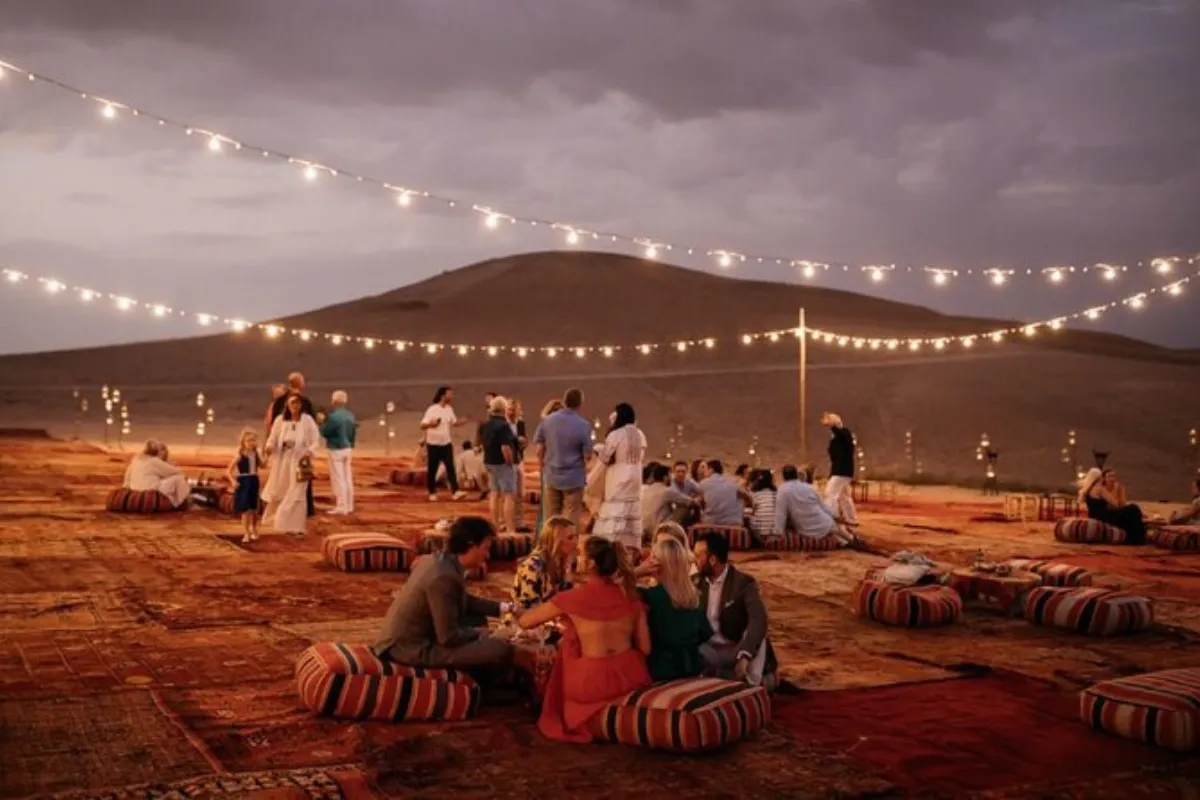

Hidden Gems of the Sahara Desert: Beyond the Desert Camp
The Sahara Desert is one of the most memorable places to visit in Morocco.
For many travellers, the experience means riding a camel through the dunes, watching the sunset and spending a night in a desert camp.
Those experiences are worth doing.
But the Moroccan Sahara is much more than the famous dunes.
Beyond the main tourist routes, you can discover remote desert villages, natural oases, fossil landscapes, traditional music, nomadic traditions and quiet places where the desert stretches as far as you can see.
The landscape also changes dramatically as you travel through southern Morocco.
There are golden sand dunes around Merzouga, rocky desert landscapes near Zagora and M’Hamid, palm-filled oases, ancient kasbahs and small communities that have adapted to life in one of the world’s harshest environments.
In this guide, we will explore 15 hidden gems of the Moroccan Sahara, focusing on places and experiences that can add something different to a desert journey.
If you are planning a longer Morocco itinerary, you can also continue with our complete guide to Hidden Gems of Morocco.
1. Khamlia Village and Gnawa Music
Place 1 of 15: Khamlia
A short drive from the dunes of Erg Chebbi, Khamlia is a small village famous for its Gnawa music.
The village has a strong connection with the Gnawa tradition, and visitors can hear musicians performing rhythms passed down through generations.
It is a very different experience from simply visiting the desert dunes.
You can sit, listen to the music and learn a little about the history and culture behind it.
Tip: Combine Khamlia with your Erg Chebbi desert experience and allow time to enjoy the music without rushing.
2. Rissani Market
Place 2 of 15: Rissani Souk
Before reaching the dunes of Merzouga, spend some time in Rissani, a historic market town on the edge of the Sahara.
Its traditional souk is a great place to see local life, with stalls selling spices, dates, vegetables, clothing and everyday goods.
The market feels very different from the tourist areas around the desert camps.
If you visit on a market day, the atmosphere becomes especially lively, with people arriving from surrounding villages and desert communities.
Tip: Visit with a local guide if possible, especially if you want to understand the products, traditions and history behind the market.
3. Hassi Labied Oasis
Place 3 of 15: Hassi Labied Oasis
Near the Erg Chebbi dunes, the small village of Hassi Labied is home to a peaceful palm-filled oasis.
The contrast between green palms and the surrounding desert makes it a fascinating place to explore.
You can walk through the oasis, see traditional irrigation channels and observe how local communities have cultivated the land in such an arid environment.
It is a quieter experience than spending all your time among the dunes.
Tip: Visit in the morning or late afternoon when the temperatures are more comfortable and the light is beautiful.
4. Dayet Srji Seasonal Lake
Place 4 of 15: Dayet Srji
Near Merzouga, Dayet Srji is a seasonal lake that can transform the desert landscape after periods of rain.
When water is present, the area can attract migratory birds, making it particularly interesting for nature and photography enthusiasts.
The lake provides a striking contrast to the surrounding dunes of Erg Chebbi.
Its appearance changes with the seasons, so it should not be treated as a guaranteed year-round attraction.
Tip: Ask your local guide about current conditions before visiting, as the lake can be dry during much of the year.
5. The Fossil Fields Around Erfoud
Place 5 of 15: Erfoud Fossil Sites
The area around Erfoud is famous for its fossils and unusual geological landscapes.
Local workshops display and work with fossil-rich stone, producing tables, plates, decorative pieces and other objects.
A visit can be more interesting when you learn how fossils were formed and how local artisans transform the stone into finished products.
It adds a completely different dimension to a Sahara journey beyond dunes and camel trekking.
Tip: Visit a reputable local workshop and ask about the origin and age of the fossils before buying anything.
6. The Desert Village of M’Hamid

Place 6 of 15: M’Hamid
At the end of the road in southern Morocco, M’Hamid is one of the gateways to the deeper Sahara.
Unlike the more developed desert areas around Merzouga, M’Hamid has a remote atmosphere and provides access to vast desert landscapes around Erg Chigaga.
The village itself is worth exploring briefly, with its palm groves, small streets and traditional desert architecture.
From here, you can continue by 4×4 towards more remote dunes and desert camps.
Tip: If you want a quieter Sahara experience away from the busiest routes, M’Hamid and Erg Chigaga are excellent options.
7. Erg Chigaga’s Remote Dunes
Place 7 of 15: Erg Chigaga
Far from the larger tourist centres, Erg Chigaga offers one of Morocco’s most remote desert experiences.
The huge dunes stretch across the landscape, with long distances between camps and very little development around you.
Reaching the area usually requires a 4×4 journey from M’Hamid, which is part of the adventure.
Here you can enjoy the silence, walk through the dunes, watch the sunset and spend the night under a spectacular desert sky.
Tip: Choose a private desert experience if you want more flexibility with your route, stops and time in the dunes.
8. The Sacred Oasis of Oum Lalaag
Place 8 of 15: Oum Lalaag Oasis
Deep in the desert around the M’Hamid and Erg Chigaga region, Oum Lalaag is known for its small oasis and remote desert setting.
The sight of vegetation and water surrounded by an otherwise dry landscape makes an oasis feel almost magical.
It also highlights how important water has always been for people travelling through the Sahara.
The location is remote and conditions can vary, so it is best visited as part of a 4×4 desert excursion with a local driver or guide.
Tip: Bring plenty of water, sun protection and comfortable clothing for the desert environment.
9. The Tinfou Dunes
Place 9 of 15: Tinfou Dunes
Near the town of Zagora, the Tinfou Dunes offer a small taste of the Sahara without requiring a long journey deep into the desert.
The dunes are surrounded by the dry landscapes of the Draa Valley and make an easy stop for travellers exploring southern Morocco.
They are smaller than the huge dunes of Erg Chebbi or Erg Chigaga, but the setting is still beautiful, especially around sunrise and sunset.
Tip: Combine Tinfou with a visit to Zagora and the Draa Valley for a more complete southern Morocco experience.
10. The Draa Valley Palm Groves
Place 10 of 15: Draa Valley
The Draa Valley is one of southern Morocco’s most beautiful landscapes, where long stretches of date palms grow beside the Draa River.
Driving through the valley, you can see palm groves, small villages, ancient kasbahs and dry mountain landscapes.
It is a fascinating contrast to the surrounding desert.
Stop in a local village or walk through part of the palm oasis to appreciate how communities have traditionally depended on this narrow strip of fertile land.
Tip: The road between Ouarzazate and Zagora offers many opportunities to stop and enjoy the landscape.
11. Tamegroute and Its Green Pottery
Place 11 of 15: Tamegroute
South of Zagora, Tamegroute is a small village famous for its distinctive green pottery.
Local artisans have preserved traditional pottery techniques, creating bowls, plates and other handmade pieces with their characteristic glaze.
The village is also known for its historic religious and cultural heritage, making it a worthwhile stop while travelling through the Draa Valley.
Visiting a workshop gives you the opportunity to see how the pottery is shaped, glazed and fired.
Tip: Buy directly from local artisans when possible and ask about the traditional production process.
12. The Old Kasbahs of the Draa Valley
Place 12 of 15: Traditional Kasbahs
Scattered through the Draa Valley are old kasbahs and fortified villages that reveal another side of southern Morocco.
Some are beautifully preserved, while others have weathered with time.
Their mud-brick walls, narrow passages and traditional architecture show how communities once protected themselves and adapted to the harsh desert environment.
Instead of only photographing them from the road, stop at a village and explore with a local guide when possible.
Tip: Ask your guide about the history of the kasbah and the families who still live in or around these traditional settlements.
13. Nomadic Desert Encounters
Place 13 of 15: Nomadic Life
One of the most meaningful Sahara experiences can be learning about the traditional lifestyle of nomadic communities.
Across southern Morocco, some communities have historically moved between different areas of the desert with their animals, following seasonal conditions and available water.
A respectful visit can give you insight into traditional tents, food, crafts and desert survival.
This should always be arranged through local people rather than treating communities as a tourist attraction.
Tip: Ask your local guide to arrange an appropriate cultural visit and always respect privacy and local customs.
14. Desert Music Around the Campfire
Place 14 of 15: Traditional Desert Music
When night falls in the Sahara, the experience does not have to end after dinner.
In many desert camps, evenings are accompanied by traditional Moroccan music, with drums, singing and stories around the campfire.
The music creates a completely different atmosphere under the stars.
Rather than simply watching a performance, take the opportunity to learn about the songs and traditions from the people performing them.
Tip: Choose a locally operated camp where the evening entertainment is connected to the region’s culture rather than a generic show created only for tourists.
15. Sunrise Over the Sahara Dunes
Place 15 of 15: Sahara Sunrise
Our final hidden gem is a simple experience: waking up early and watching the sunrise over the Sahara.
The dunes are often quiet before the day begins, and the changing light creates beautiful patterns across the sand.
Whether you stay around Erg Chebbi, Erg Chigaga or another desert area, sunrise can be one of the most peaceful moments of the entire journey.
Leave the camp before sunrise if conditions allow, find a high dune and watch the landscape slowly come to life.
Tip: Take a warm layer, as desert mornings can be surprisingly cold even after a hot day.
Now let’s add the short practical section for the Sahara page.
How to Discover the Hidden Gems of the Sahara Desert

The Sahara is vast, so the best experience comes from choosing a few places rather than trying to see everything.
How Many Days Do You Need?
Allow at least 2–3 days for a meaningful desert experience. Longer trips give you more time for remote areas such as Erg Chigaga and the Draa Valley.
Choose the Right Desert
Erg Chebbi near Merzouga is ideal if you want spectacular dunes and a wide choice of desert camps.
Erg Chigaga near M’Hamid is better for travellers looking for a more remote experience.
Travel With a Local Driver or Guide
Some desert locations are remote and difficult to reach without local knowledge. A private 4×4 journey also gives you more flexibility to stop and explore.
Don’t Rush the Desert
The Sahara is not only about reaching the dunes.
Take time to visit villages, oases, markets and local communities. These experiences can make your desert journey much more memorable.
Combine the Sahara With Southern Morocco
The desert can be combined with the Draa Valley, Ouarzazate, Aït Ben Haddou, Dades Valley and Marrakech, depending on your itinerary.
For more lesser-known destinations across Morocco, continue with our Hidden Gems of Morocco guide.
Next, let’s add the Tiziri Travel section and CTA.
Explore the Sahara Your Way With Tiziri Travel
The Moroccan Sahara is much more than a camel ride and one night in a desert camp.
With a private journey, you can explore remote dunes, visit desert villages, discover local traditions and spend more time in the landscapes that interest you.
At Tiziri Travel, we create private, tailor-made Sahara experiences based on your travel dates, interests and preferred style of travel.
Choose Your Desert Experience
You may prefer the spectacular dunes of Erg Chebbi, the remote landscapes of Erg Chigaga or a journey through the Draa Valley.
Your itinerary can also include local markets, oases, kasbahs and cultural experiences along the way.
Make the Journey Part of the Experience
Instead of simply travelling from one destination to another, we can plan stops along the route so you have time to discover southern Morocco.
You can combine the Sahara with Marrakech, Ouarzazate, Aït Ben Haddou, Dades Valley or other destinations.
If you would like to create your own private Morocco journey, explore our Morocco Tailor Made Tours and tell us what you would like to experience.
We will help you build a comfortable itinerary that combines Morocco’s famous desert landscapes with authentic local experiences.
Frequently Asked Questions About the Hidden Gems of the Sahara Desert
-
What are the hidden gems of the Moroccan Sahara?
They include lesser-known desert villages, oases, local markets, fossil areas, traditional kasbahs, remote dunes and cultural experiences beyond the standard camel ride.
-
What is the best hidden gem in the Sahara?
It depends on your interests. Erg Chigaga is ideal for a more remote desert experience, while Khamlia is excellent for travellers interested in Gnawa music and local culture.
-
Is Erg Chigaga worth visiting?
Yes. Erg Chigaga offers a more remote desert experience and is less developed than the main tourist areas around Merzouga. Reaching it normally requires a 4×4 journey from M’Hamid.
-
What is the difference between Erg Chebbi and Erg Chigaga?
Erg Chebbi is near Merzouga and is easier to access, with many desert camps and activities. Erg Chigaga is farther from the main towns and offers a more remote experience.
-
How many days do I need in the Sahara?
For a good experience, allow at least 2–3 days. A longer itinerary gives you time to explore villages, oases, valleys and remote desert areas.
-
Can I visit the Sahara without riding a camel?
Absolutely. You can explore by 4×4, walk through the dunes, visit villages and oases, enjoy desert music or simply spend time watching the sunrise and sunset.
-
Can I combine the Sahara with Marrakech?
Yes. A private Morocco itinerary can combine Marrakech with the High Atlas Mountains, Aït Ben Haddou, Ouarzazate, Dades Valley and the Sahara.